From a Sermon given at the Spring Equinox Worship Service on March 23, 2025.
This morning, I want to talk about God. I was asked to do so by one of our community members who said she was frustrated about how distant she is feeling from God these days.
Finding, sensing, living daily with God is an issue relevant for not only this individual but for all of us. It is a very big part of our evolutionary process right now as human beings on Planet Earth. There is a reason why diversity, equity and inclusion is such a hot topic right now; and that reason is not political.
I love it when people talk about diversity, equity and inclusion by asking the question: who should sit at the table. When we are discussing the issue of which people should be allowed to benefit from life’s bounty, what we are really trying to explore is moving our frame of reference from our individual culturally-programmed, outmoded, transactional tribal view to the larger picture, to God’s unconditional love frame if you will.

As you probably know, here at the Church of the Harvest we generally avoid talking about God directly. What I do often talk about is how many concepts important about spirituality struggle with the words falling apart when it comes to conveying essential spiritual truths. People project their own life experience upon verbal statements. We almost always assume our version of any word with a particularly strong amount of energy attached to it, is the accurate version that applies to everyone. It rarely is.
Nowhere is this more evident than when trying to talk about God. When I need to point to the divine, I bend over backwards to use every variety of nomenclature I can think of. Sometimes I use words straight out of some religious playbook. I’ll talk about the Lord God, the Tao, Allah, Dharma, whatever. Sometimes I’ll reference concepts that at their purest I know to be a reflection of God but are concepts that other people usually do not consider religious, such as talking about the universe, Mother Nature, Truth, Justice or Love. Most often I end up talking about the All-That-Is, or the Creator-of-Us-All, phrases that are a bit on the awkward side to my own ears, and to many others, but also fairly neutral terms.
I always know that whatever word I use, I’m going to lose a certain percentage of my listeners, those who won’t be able to hear what I say through their particular version of religious programming. And more importantly, whatever word I use I know will be inadequate to encapsulate the whole of the divine.
For the rest of today though, I’m intentionally going to use the word God. But trust me when I say, God as I reference it is not a he or him or a patriarch of any kind. He is also not a she or a her or trans or genderless, exactly. If we have to use a pronoun, maybe we settle for now on “it” or even “they.”
Due to the literary confusion, God is referenced minimally at the Church of the Harvest, despite the fact that we are a church, and indeed one that exists specifically to increase communication with the Creator. The last of our aspirational goals as written in our foundational documents–duly filed with secular authorities as well as living within our structure–provides a clue as to why we speak of God, when we do at all, using such varying terminology. The statement reads simply that we are committed to honoring all paths to God.
Given this context, what is the best word to use to address the Creator-of-Us-All?
Short answer: It doesn’t matter. God is everywhere, everything and everyone.
I say that knowing that our human brain cannot really grasp that notion. We would go crazy if we tried very hard. How can God possibly be everything in existence? How does that work?
We know that we have a physical body that is an extension of us that is a fully enlivened container separate from other forms of life on the Planet. We know that in addition to that life form God gave each of us we were also given free will, the exclusive right to decide what will occur within and around the body, as a different experience than any other embodied presence.
Additionally we know that we are spirit and as such, seamlessly connected with all other spirit. How can these two truths coexist?
They can and do. But not in a way our brain can track. So, let that part go. This is a thing of faith. Let us just all agree to take to heart the words of esteemed American author F. Scott Fitzgerald who famously once said: “The test of a first-rate mind is the ability to hold two opposed ideas at the same time and still retain the ability to function.”

In psychology, the discomfort that arises when people try to hold conflicting beliefs in their mind is called cognitive dissonance. It’s a big deal. Cognitive dissonance can lead to a great deal of anxiety and depression, even to the point of inability to function. A large amount of cognitive dissonance can even result in suicidality or psychosis.

Many people who cannot handle cognitive dissonance attempt to eradicate it by isolating themselves, structuring their life so that do not have to deal with conflicting viewpoints. Unfortunately in the digital age that is not really an option any more. So instead, what we are seeing more and more of, is people with less ability to tolerate contradictions trying to force their limited perspective on those around them. Sometimes I think there has never been a time when people have talked more about free speech and worked quite as hard at silencing others to make sure it does not happen. This is cognitive dissonance at its most intense.

A good example of cognitive dissonance running amuck right now is “control freaks” trying to rewrite United States history. Rather than simply dialoguing about their differing perspective, these misinformation addicts are scrubbing the history books of key concepts, banning certain film and books altogether, eliminating social media posts by inundating them with threatening or hate-filled comments, changing governmental policies including destroying programs or agencies that express differing cultural values, and passing laws or actually persecuting individuals and groups who express a perspective about the United States that creates cognitive dissonance for the small-minded addict.
Let me be clear. America is a truly great nation state. It has also engaged in systematic oppression of other countries and groups; and perpetuated vast suffering and horrific wrongdoing. The more developed mind, the brain of someone who has had more exposure to life’s inherent contradictions and has learned to emotionally tolerate them, knows both these concepts can be true. The weaker mind that has not grown beyond binary thinking is threatened by these seeming clashes. Cognitive dissonance with its disorienting loss of personal integrity, can kick individuals into extreme turmoil and even violence.
What has this got to do with God, you might ask? Well, people do the same mental shenanigans with our ideas around God. No doubt you have noticed that contradictory ideas about religion and God are at the heart of much of human warfare. Human animals collectively project onto the Creator wherever we are at. Whatever is unresolved in our world as we look outside of ourselves for understanding or for help shapes what we can understand about God. We create an image of the divine that is bigger than ourselves, more powerful, but somehow looks, thinks, and acts a lot like human beings do.


It has been so since the beginning. In our early hunter-gatherer days, the human species was focused solely on survival. God was unknown and unfamiliar, like the natural world around us. It was essentially devoid of understanding and to some extent, meaning. We created a God or Gods to fill that void. The world was dangerous and often deadly; and we looked everywhere around us for salvation.
During this period humans routinely saw God in the plants and animals around them. For early indigenous peoples, God could even be simply the elements themselves: fire for example, or maybe a rain God that was equally capable of nurturing crops or destroying places with torrential force. For the Hebrews, God was a burning bush among other things. Early Asian, Indonesian and other tribal groups living in mountainous regions were in awe of and also often terrified by their mountains that they often saw as Gods, as well as the God-like monsters that lived in the seas.

As early civilizations began, our human images of God went from a wild, unknown and untamed deity or deities to a deity or deities that were somewhat known but often hostile. To use the phrasing coined by philosopher Alfred North Whitehead, humanity started with religious belief in God the Void that became God the Enemy. As people began to come together in stationary agricultural and other communities, there was increasing intertribal and other forms of interpersonal conflict. So now we see a God or Gods more actively involved with people, but a divine that is often stern, punishing and wrathful, like a capricious and bad parent. The Greeks and Romans had their pantheon of supernatural beings, all vying for control and servitude over their human underlings. The Old Testament of the Jewish people focused on God’s anger control issues; and Asians folks had their demons and devils plaguing all humanity.
Where to now for human animals as our social groupings and our collective human consciousness transform? As we continue to evolve towards our Creator, how are we changing the images of how we imagine it? North Whitehead would say that religious institutions are taking us from God the Enemy to God the Companion. This is where the discussion comes in about which side God is on. It is certainly more true that God walks among us, as opposed to simply observing us from a distance. But consider the idea that seeing the divine as walking only alongside a particular group or groups is already an idea that is rapidly becoming outdated.
The digital age is moving images and the information upon which it is based exponentially forward. The natural world is also speeding our internal world up as the vibrational levels of the Planet itself increase rapidly.
Personally, to describe our present confusion about God, I am drawn to a saying attributed to psychologist and part time mystic Carl Jung. According to Jung: “Modern people don’t see God because they don’t look low enough.” What I think he was talking about was the fact that we are beginning to come to terms with the fact that God is as much a fully embodied aspect of Earth as it is the ruler of Heaven.

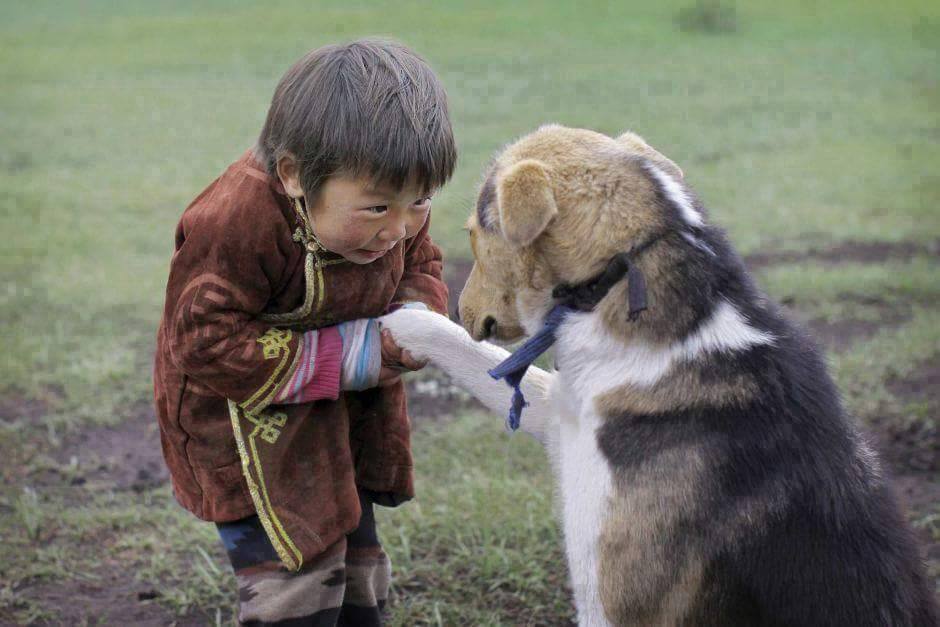
Truth here from Buddhist monk, poet and teacher Thich Nhat Hanh. Used in conjunction with Fair Use Principals.
Yes, God is our companion. God is indeed on our side. God is on everyone’s side.
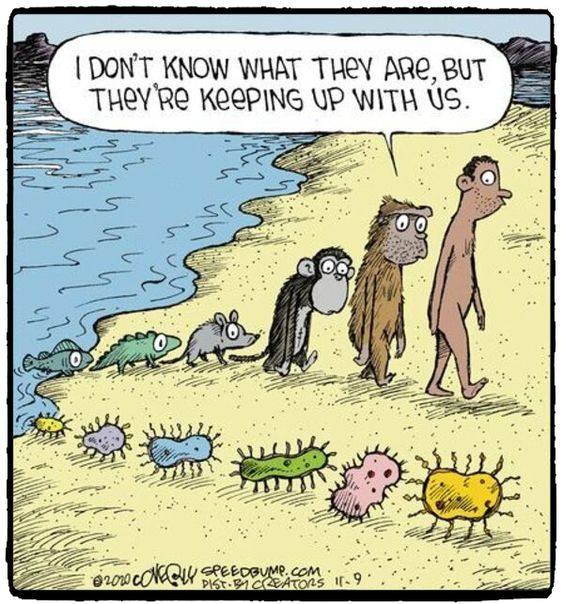
But maybe more importantly to our present-day challenges, God is everyone. And God is everything. The air that surrounds us that we breath in to give our bodies continued life. The constellations above us, the stars that gave us carbon, oxygen, and nitrogen, the essential foundational elements for physical life. But also, the very ground beneath our feet. The waters that flow through the ground, huge bodies of which are all around us, not to mention the approximately eight gallons within our individual embodiment. Every cell in our body with its elaborate intricate structure, including every bacterium, virus, fungi and other “independent” life forms that lives there within and around us. Every insect, every plant, every animal, even the nasty ones.
The miraculous life that the divine has bestowed upon human beings as a reflection of its endless creativity was also freely given to all of Planet Earth. No exceptions.

To my friend and colleague who is asking how she might feel closer to her God, I say, continue to get to know yourself through meditation, to release what does not serve you, and thereby change your mindset. I am not talking about your brain, although that organ might be more useful if it was fed from a few different energetic streams. I am telling you, you are in need of more faith.
Please do not think I am talking about beliefs. I mean faith of the kind not petrified by religious dogma, but rather capable of glorifying the Creator-of-Us-All. The divine is within you, as it is everywhere. There are so many places to experience a living God. But tuning in to that aspect that dwells within you in solitude, as it/you simply awaits your recognition, is one of the most direct.

Sraddha, the Hindu word for faith, means “to set own heart’s on.” It is an action, an everyday commitment that needs constant refreshment. This kind of faith involves giving shape to your life not through some limited intellectual process but rather by setting your fourth chakra and all the other corresponding parts of your intricate energy and physical systems in an conscious intent to acknowledge your relationship with every other aspect of God on the Planet. Which is everyone and everything.
I want to leave you today with a final question that comes from James Fowler. Fowler is a developmental psychologist who wrote about the various stages of faith that individuals can go through as they mature in their ability to live with God. I personally think Fowler was one of the most underappreciated theoreticians by religious and secular authorities alike because he himself was so far beyond the place that many are able to inhabit. I invite you to try to hear his words here almost like a mantra, not with your brain but with your heart. Fowler counsels us to keep moving in the optimal direction by continual alignment with God with awareness, dedication to self and others, and faith.
“The real question of faith is this: To what vision of right-relatedness between humans, nature and the transcendent are you loyal?”
Copyright by the Rev. Dr. Resa Eileen Raven, 2025.
 Church of the Harvest
You must be logged in to post a comment.