The Lord’s Prayer, from the New Zealand Maori Anglican Liturgy

The Lord’s Prayer, from the New Zealand Maori Anglican Liturgy:

Eternal Spirit, Earth-Maker, Pain Bearer, Life-Giver,

Source of all that is and shall be,

Father and Mother of us all,

Loving God, in whom is heaven:

The hallowing of Your Name echo through the universe!

The way of your Justice be followed by the people of the earth!

Your Heavenly Will be done by all created beings!

Your Commonwealth of Peace and Freedom sustain our home and come on earth!

With the bread we need for today, feed us.

In the hurts we absorb from one another, forgive us.

In the times of temptation and test, strengthen us.

From trials too great to endure, spare us.

From the grip of all that is evil, free us.

For You reign in the glory of the power that is Love,

Now and forever. Continue reading

Prosperity

From a sermon given June 1999 at the Summer Solstice Worship Service:

Prosperity is a very hot topic these days here on Planet Earth.  Many people seek it, even in these days of dwindling resources when people are increasingly aware that there is a limit to what is provided by the Universe free of charge to those of us playing the game of life.  So I thought I’d spend a few minutes this morning talking about my views on what prosperity is and more importantly, what it is not.  Usually it’s easier to find something when you understand what you are looking for.

Until lately, the topic of prosperity hasn’t interested me much.  Like many of us, I was raised in a family and a community that was built on a foundation of scarcity, despite outward indicators of abundance.  There was always food on the table and money for basic necessities but there was also the unspoken sense that the outward stuff could disappear at any moment.  Both my parents had barely survived the Great Depression in the United States, so they were uneasy with their new-found economic advantages.  But as a kid, I was more focused on their uneasiness than the source of it.  I had many basic questions such as why my father worked so hard he didn’t have any time for his children, even though he clearly loved them; and why my mother didn’t seem to enjoy anything about her life, even though she seemed to have everything moms were said to need.  Although I didn’t have the words for it as a child, I was tuned into the poverty of spirit around me.  In a sense, I have been dealing with prosperity, or its alter ego poverty, all my life.  I just haven’t been very interested in the monetary aspect of it until more recently.

I first began to look more deeply at the concept of prosperity about fifteen years ago when I was going through the seminary.  At that time I belonged to a church full of very insightful, interesting and powerful people who were teaching me the basics of working with energy–my own, other people’s and the energy of the universe.  At some point a workshop on Prosperity was scheduled that I was not planning to attend but about which many of the people around me were excited.  And then, expectantly, it was canceled.  And the word came down through the ranks that the church leadership were not able to handle the energy from the workshop.  Now THAT got my attention.  Here were some of the bravest, most talented people I had ever met who were doing amazing things, performing miracles on a daily basis, but who were saying that they did not have what it took to deal with the topic of prosperity.  It was then that I realized that prosperity is a concept of great depth.

Since that time I have paid attention to how prosperity gets played out in our shared world.  I am here this morning to tell you about three conclusions I have reached in the last fifteen years, three principles if you will, principles that I believe are true.

prosperity2

First of all, Prosperity is about wealth of the spirit, not wealth of the body.

This is very important to understand.  Perhaps you have run across one of the thousands of courses, classes, workshops, study groups, organizations, or whatever, that exist in the community that purport to teach people how to create monetary wealth.  Sadly, there are even entire “prosperity churches” that are dedicated to this goal.

If you are in need of money, taking a class on such physical aspects as how to play the stock market, set up savings plans, buy real estate or whatever, may be a good idea for you.  Just don’t delude yourself into thinking that what you are doing is increasing your prosperity.  You may be increasing your monetary resources, which may or may not be a good thing for your overall spiritual development.  But this has little or no connection to your real prosperity level.  People can have a lot of money and no prosperity.  Conversely, people have little or no material resources but an abundant and dynamic prosperity.

Prosperity is about inner wealth, a sense of richness in one’s lived experience.

What I call “true prosperity” is having the experiences that you as spirit want to be having in your life to learn what you came here to learn. . .and if it takes money for you to have those experiences, so be it.

prosperity3

Second of all, Prosperity comes with a price.

We don’t like to hear that.  Indeed, this a message that is almost entirely absent in all those thousands of courses, classes, workshops, study groups, organizations that are often so happy to take your money to teach you how to be prosperous.  We prefer to think of prosperity as a free lunch.  It’s not at all free.  What is the price of prosperity?  Responsibility, of course.

“True” prosperity is a manifestation of energy, like everything else.  If you have a lot of it, you are necessarily gong to be dealing with a lot of energy.  The more you have, the more you must take care of, must work with responsibly. . .or you lose it.  The universe gives freely to those who wish to receive, but it also takes back–eventually if not right away–what is misused, taken by those who cannot handle the gift, or otherwise received ungraciously.

If you can’t handle the responsibility of increased prosperity, you will find that people rush in to take it from you or control you through it.  control

Or you may develop an illness that uses up all those resources, or whatever.  I’m reminded of all the lottery winners who end up dying of a heart attack or something shortly after their win.

It’s not a question that somehow you didn’t “deserve” that increased level of resources.  The universe is much more fair than that.  It’s only a question of the energy flowing to where it ultimately can best be utilized.  Think of true prosperity as a raging river.  You can dam it up or try to divert it to something other than its natural causeway and sometimes, if you’re in sync enough with nature and you’ve taken the time to do the necessary engineering and environmental studies, that may work.  If you haven’t done your work or you’re trying to force something unnatural onto the Earth, the river will overflow its new banks, become stagnant, or otherwise have problems.

In this case, “doing the work” means spending the time getting to know yourself and your spiritual purpose; and if you truly require a large amount of material resources in order to serve that purpose, being prepared to pay the price of living life on a raging river.

prosperity1

Third of all, All prosperity comes from God, and all true prosperity is in the service of God.

The creator knows no lack.  Nonetheless, that infinite wisdom allows us to create scarcity because of its endless love for us and perhaps its greatest gift to us:  the gift of free will.  People ask me all the time:  isn’t abundance limitless?  God has no limits; but we do.  And sometimes we impose those limits on ourselves for reasons that make sense even to us, if we were honest with ourselves.  And sometimes we impose those limits on ourselves for reasons that we are not yet willing and/or capable of understanding.  And sometimes we impose those limits because we are lost.

It’s all up to us.

We get to be rich in spirit or impoverished, depending on our soul’s desire and that choices we make in trying to bring that desire to fruition.  Not coincidentally, we get to be rich in physical resources or impoverished, depending on what we are trying to learn, want to experience and the choices we make in creating that experience.

Only you can examine your conscience, and discover what your prosperity needs to be to accomplish your purpose in life.

I’d like to end my sermon this morning with the words that I was drawn to last year after praying for several days for insight about the name of this new church that we were about to incorporate.  I woke up one morning knowing the name was in Luke, Chapter 10, Verse 2:

The harvest truly is great, but the laborers are few.

Pray thee therefore to the Lord of the harvest.

That he would send for the laborers into his harvest.

Copyright 1999  Rev. Resa Eileen Raven

Prosperity

From a sermon given June 1999 at the Summer Solstice Worship Service:

Prosperity is a very hot topic these days here on Planet Earth. Many people seek it, even in these days of dwindling resources when people are increasingly aware that there is a limit to what is provided by the Universe free of charge to those of us playing the game of life. So I thought I’d spend a few minutes this morning talking about my views on what prosperity is and more importantly, what it is not. Continue reading

The Economy I: Where We’re Coming From

This article was written by the Rev. Resa Eileen Raven and published for the first time in March 2010 in a blog entitled “Ravings from the Rev”:

Last month Newsweek contained an interesting article that was called “May the Best Theory Win: How Economists Are Competing to Make Sense of Our Failed Financial System.” Basically the article was about how none of our existing belief systems can account for the current economic climate. They all are short of the mark, leaving those of us trying to weather the economy massively confused and frightened, and decision-makers clueless about how to get us out of the slump.

I always like it when the powers-to-be can honestly admit their ignorance, but the thing that really caught my eye was the article’s characterization of economists as doing a lot of “soul-searching.”

“Soul searching”–what an interesting choice of words. Maybe it is a stereotype of mine but I don’t think of economists as having much interest in or knowledge about soul. And yet. . .soul really is what is going on right now in regard to the economy.

To be fair, I don’t think those of us who have interested in soul for our part have had a lot of interest in the economy. There is a reason why Jesus of Nazareth talked about it being harder for a camel to go through the eye of a needle than a rich man to get into Heaven. . .and why, when he threw his one and only hissy fit of record, it was directed at a marketplace. Spiritually, you can lose yourself very easily if you get caught up in the exchange of money for goods and services. For many of us truly committed to our spirituality, focusing on money hasn’t been worth the risk. But I believe that this is the time for those of us who value the spiritual path to also learn to pay attention to economic issues, if for no other reason than to put them in their proper place.

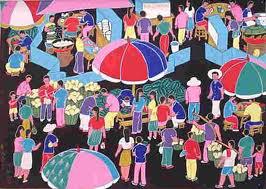
For nearly two million years, human beings were tribal, nomadic, and completely preoccupied with survival in an immediate sense. It was primarily with the rise of early human civilizations some 8000 years ago, when we transformed from hunters/gatherers, that we developed the first “economies.” Farming the land, domesticating animals, constructing salt mines to preserve food, all these allowed people to have more than they needed at times, to accumulate “wealth.”  Folks could then trade with people outside of their own family/clan/tribe. Agricultural-based societies always eventually created a marketplace where people could swap things they did not want or need, with other things their neighbors offered.

marketplace

This production of “wealth” came with advantages and disadvantages. It had the obvious benefit of accumulating enough to meet the basics of life and a little extra to make life sweeter. It allowed individuals to exercise their God-given creativity. But it also provided opportunities for some to exercise greed, and/or exert control over their neighbors through the granting or withholding of resources, in a way that would not have been as tolerated in a more collectivistic hunter/gatherer society.

Anthropologists tell us that hunter/gatherer societies are almost always egalitarian in structure, whereas agricultural/industrial societies organize their members hierarchically. Counsels of elders and clan leaders eventually gave way to leadership by warlords and theocratic/civil governments who had the authority to intervene in human life but were often far removed from the real consequences of those interventions.   Whoever held the political reins could advance their economic interests to the detriment of others not in power, and they could do so without having to see, feel or hear from the people affected by their decisions.

For example, in 200 BCE, when the feudal kingdoms of China were united into one country, making China arguably the most advanced civilization on Earth at the time, its rulers could declare that all the iron and salt in the land belonged to them because they had to build a Great Wall to keep out the Huns. Businesses that needed iron had to pay exorbitant prices for it, forcing hundreds to lose their livelihood; and thousands of people who couldn’t afford the salt tax and therefore had no way of preserving food for the winter, were left to starve. This is one of the first of many examples of price-fixing and government monopolies leading to real suffering by those not at the top of the hierarchy.

salt pix

So what has this got to do with the economy today? Understand that there is a lot of history here, a lot of energy that has gone into our current economic dilemmas. We’ve been lost for a long time. For thousands of years, 8000 more or less, we’ve increasingly based our lifestyles, our political structures and our marketplaces on the acquisition of wealth and the physically-based needs that it can feed: glory, power, status, and hedonistic pursuits. Fair exchanges of goods and services in order to share with each other, has been an increasingly rare experience.

We’ve largely squandered the Earth’s once abundant resources, and have tried God’s patience enormously. During this time of great balancing, there is a lot to put right. And a lot of new ways of thinking will be required.

Copyright 2010  Rev. Resa Eileen Raven

The Economy I: Where We’re Coming From

This article was written by the Rev. Resa Eileen Raven and published for the first time in March 2010 in a blog entitled “Ravings from the Rev”:

marketplaceLast month Newsweek contained an interesting article that was called “May the Best Theory Win: How Economists Are Competing to Make Sense of Our Failed Financial System.” Basically the article was about how none of our existing belief systems can account for the current economic climate. Continue reading

Superstition

superstition
This article was published for the first time in January 2010 in a blog entitled “Ravings from the Rev”:

OK, so one of the things I definitely feel the need to rave about is the whole concept of superstition. For one thing, it’s one of those words that is amazingly pejorative, but in a sneaky kind of way. When you tell someone that they are being superstitious, you are not only telling them that they are an idiot about a particular subject, but also that their whole thinking process is flawed. And to make matters worse, the underlying assumption is that, by contrast, you are a superior person by virtue of your ability to reason.

Superstition comes from the Latin superstitio, translated as “amazement or wonder of the divine or the supernatural.” Originally, the concept was applied by the Romans towards the people they conquered who did not share their committment to the Roman pantheon of Gods. Over time, after the Romans themselves were conquered culturally by that exciting new group of religious zealots who called themselves Christians, superstition became associated with the indigenous pagan religions that were Christianity’s main threat to expansion.  As the centuries went by and Christianity established itself as the prevailing–and mandatory–religious belief system in Europe, superstition became any belief in opposition to Christianity.

The Scientific Revolution in Europe further expanded–and muddied–the doctrinal waters. Eventually we evolved into the contemporary situation where many Christians and other religious folks view science with skepticism or even horror, seeing it as full of superstitions like evolution and global warming; while many scientists and their admirers think religion one mass collection of delusions. And of course, both science and orthodox religion trivialize indigenous spiritual perspectives as “folklore,” i.e. the stuff of “primitives” who are not advanced enough to participate in true faith.

I believe the core of this debate is an essential epistemological question. Who has the right to define what is Truth, with a capital T? One might answer that only God does. Then, who among us gets to interpret the ways of the divine and how that Truth is made manifest? Or said in a way that takes out the controversial “G” word altogether, who gets to interpret the ways of the natural world and come to conclusions about its order?

Should we allow the reductionist paradigm of science to judge the big picture? “I can do without the superstition” says Capt. Jack Harkness of the BBC Torchwood series. “You people love any story that denies the randomness of existence,” (Season 1, Episode 1).  Now I love Capt. Jack but he has his blind spots. Should we allow popular religious leaders to interpret the actions of the ineffable through their limited human understanding? Personally, I found television evangelical Pat Robertson’s recent comments attributing the suffering of the Haitian people after the earthquake to their pact with the Devil outrageous, and highly unChristian.

Let’s make our own pact. Let’s all be superstitious, that is to say, full of wonder at the created order, irrespective of what you think that order looks like; or who or what you think created it. And as to the details, since one person’s superstitions could very well be another person’s cherished beliefs, let’s cut out the judgment of which is which. No, I don’t believe that breaking a glass brings me seven years of bad luck. But if you do, that’s fine with me.

Copyright 2010  Rev. Resa Eileen Raven

Superstition

This article was published for the first time in January 2010 in a blog entitled “Ravings from the Rev”:

superstitionOK, so one of the things I definitely feel the need to rave about is the whole concept of superstition. For one thing, it’s one of those words that is amazingly pejorative, but in a sneaky kind of way. When you tell someone that they are being superstitious, you are not only telling them that they are an idiot about a particular subject, but also that their whole thinking process is flawed. And to make matters worse, the underlying assumption is that, by contrast, you are a superior person by virtue of your ability to reason. Continue reading

Angels and Devils: The True Nature of Good and Evil

angels

From a sermon given September 2002 at the Fall Equinox Worship Service

When we originally picked the topic for this service, I had no idea it was such a controversial one. I just thought it would fun to look at one manifestation of a great roadblock that faces individuals and society as a whole who are trying to find peace. That is: the tendency of all of us to divide the world into good and evil.

Planet Earth really is a world of dichotomies; a vast playground full of polarized opposites. It is our job to notice these opposites and learn to choose the middle ground, the high ground so to speak. Other places in the universe do not provide this same challenge of polar opposites. The overarching defining principle of Planet Earth is that we have been gifted with free will. To maximize the learning process upon which we are all engaged, it is helpful for us to be presented with a wide range of opportunities so that we can learn to make choices that are productive and in keeping with divine intention. We are constantly given choices that involve one extreme or another. Thereby we can choose, if we want, to find the balanced perspective in between the extremes. That middle ground is where the peace lies, the inner peace for individuals; and the outward manifestation of it–the peaceful coexistence for groups of individuals.

The tendency for we humans to dichotomize runs so deep that we create situation after situation of “us versus them” in the world at large. As humans, our very brains become accustomed to, and find it most familiar to process the world from an either-or perspective. That same tendency runs deep enough in our basic makeup that we even dichotomize the world of spirit, much as we dichotomize the material world. Thus, in most religious traditions there exists angels, who are the good guys; and devils, who are the bad guys. Sometimes the latter are talked about as fallen angels, acknowledging that they are simply a point in a continuum; and sometimes they are seen as a class of villains by themselves with no particular angelic etiology.

It’s been many years since I looked at the concept of angels and devils. I deal with the spirit world on a daily basis, but I use other filters with which to view that reality. So to prepare for this sermon, and reacquaint myself with how many or most people think about angels and devils, I did what any good researcher would do: I watched a lot of movies.

There is a plethora of messages about the spirit world coming through these days. In this time and place, as the heavens and earth move ever closer together, and the basic fabric of the time-space continuum transforms, our culture is flooded with spiritual images and archetypes to which many people are exposed, often without any real awareness of what it all means. Angels and devils are everywhere in increasing amounts—not just confined to paintings in museums or gargoyles on structures built in medieval times; but on key chains and other knickknacks, and Hallmark cards, and on television, shoes, and rock songs. I am told, angels are mentioned in one out of every ten popular songs. However, movies are one of my favorite ways of tuning into popular culture, so I will start there.

There are some great movies out there that work us over on a subliminal level in a positive direction. I would recommend three in particular:  Michael, in which John Travolta plays a beer-drinking, ball-scratching, bull-fighting babe magnet as the Angel of Destruction. Then there is Devil’s Advocate, in which Al Pacino is a magnificent Lucifer trying to charm an attorney played by Keanu Reeves into fathering the Anti-christ. And my personal favorite is Dogma, a movie that was subjected to a concerted boycott by fundamental Christian groups, always a good sign. Armageddon is the main event in Dogma, with Ben Affleck and Matt Damon playing fallen angels, the talented Alan Rickman as one of the angels on the right hand of God, and George Carlin with a short stint as a Catholic cardinal who doesn’t even get that the battle is raging.

Hollywood movies, as fun as they are and as important as they are at both reflecting and shaping our thought processes, are considered only entertainment. So I also did research into how most people are viewing the subject of devils and angels by reading various serious popular and religious texts. And that’s where the real fun begins. Because, as with most aspects of spirituality, people are all over the map. There is no consensus about the nature of the spiritual beings we call angels and devils.

As it turns out, the Christian Bible, that ultimate source document for many people in the United States, is strangely quiet on this subject. Although there are a number of references to angels, there are very few actual details contained therein. In the accepted scriptures of the God of the Judeo-Christian tradition , there are angels who exist to worship God, and angels who are sent out by him to protect, destroy, or carry messages to mankind. But we do not know much about who these beings are, where they live, or what they typically do in an ordinary angel day. There are only two angels who are actually named in the Bible: Michael, and Gabriel. This is not very much information about beings than are generally considered to be more numerous than the stars. I am told that in the 14th century, the number of angels was calculated by certain segments of Christianity as numbering 301, 655, 722.

Information about devils in the Bible is also largely or wholly missing. Satan is mentioned sporadically. In the Old Testament he is more in the role of a prosecuting attorney in ongoing theological debates than an evil figure. In the New Testament, he is certainly not the tunnel-visioned, stand-alone, cartoon-like figure that is portrayed by many present-day Christians.

For example, in Matthew, Chapter 17, Jesus of Nazareth has a disagreement with Simon Peter. This is directly after Jesus has told Peter that Peter is the rock upon which Jesus’s church will be built, so obviously within the context of Jesus having a great deal of faith in Peter and his abilities. Jesus tells his disciples that he will soon be crucified, and Peter tells Jesus that this isn’t going to happen. Jesus says to Peter, you are thinking from the ways of man, not God; get out of the way, Satan. What I hear from this story is Jesus’s acknowledgment that even the strongest and brightest of us can have energy not aligned with God. I do not hear validation for a separate being which we might simplistically call “the Devil.”

There is actually, a lot of information about angels and devils out there in popular literature and apocryphal or noncanonical literature, but none of the world’s religions seem to have a consistent, coherent stance on the subject. In polytheistic systems of religious belief, there seems to be more mention of but less focus on angels and devils, probably because when you base religions on inward meditation and not outward-based truth-seeking, you have less need for intermediary spirits between an individual soul and the Cosmic Consciousness.

In all the great monotheistic religions, devils and angels galore exist, but also a great deal of controversy about them, even within each church or religious denomination. Even in Hinduism, Buddhism, Jainism, and the like, there are many acknowledged spirits or devas that pursue out good or bad ends.

At various times in various ways Jews, Christians, and Muslims have all gone through periods of awakening interest in the functioning of the spirit world; followed by periods of anxiety that acknowledgement and exploration of the spirit world will lead to an undermining or destruction of faith in the teachings of the church; followed by further periods of rediscovering sacred literature about angels and devils; followed by further rejection by church leaders in the populace’s interest in these entities, etc.

For the record, I will tell you that personally, I do believe that there are spirits that will assist us in following God’s will, if we choose to avail ourselves of their assistance, spirits that might accurately be labeled “angels.” In the words of the 91rst Psalm, Verses 10-11:

He will give his angels charge of you,
To guard you in all your ways.
On their hands they will bear you up,
Lest you dash your foot against a stone.

I don’t know about you, but I am very prone to dashing my feet against stone, and consequently am quite glad for the assistance of the spirit world, which I receive freely when I remember to call upon them.

I also believe that there are spirits who are more than willing to encourage us in making choices that are detours on our path back to God, many who are simply curious or mischievous; and a few that rise to the level that might be called evil. The former could be called devils and the latter “the Devil,” if you prefer that terminology.

Ultimately, however, it is our choice who we hang out and allow around us, and who we follow–whether they have a body they work through or not. Because we have free will. We demand of the substance abuser that if they claim to be sincere in controlling their drug-seeking behavior, they must surround themselves with those who will support patterns of sobriety and other pro-social behavior. So too, is it up to us to surround ourselves with those who will lead us to the righteous pathway. When we can acknowledge the self-responsibility that derives from our free will from a place of awareness and a place of nonjudgment, than we can make clearer and more productive choices that are the more direct route to the true peace that comes only from connection to our Source.

So what is the True Nature of Good and Evil? You know me. Of course, I’m not going to impose my truth upon you. Feel free to discover your answers in your meditations over time. But I would like to leave you now with an interesting tidbit I ran across in my research. According to Malcolm Godwin, who wrote a book called Angels:  An Endangered Species, among the stories about the war between the angels in heaven in various Christian texts, there was one version that was suppressed by the Catholic Church. In this version of genesis or the apocalypse or whenever this war supposedly takes place, there were three groups of angels, not two. One-third sides with God, one-third with the Devil, and one-third chooses to stay out of the conflict. Reportedly it was this third group of angels, the ones who chose neutrality, the not-very-bad but not-very-good-ones, who later bring the Holy Grail to Earth.

Copyright 2002  Rev. Resa Eileen Raven
Angels and Devils: The True Nature of Good and Evil

From a sermon given September 2002 at the Fall Equinox Worship Service

angelsWhen we originally picked the topic for this service, I had no idea it was such a controversial one. I just thought it would fun to look at one manifestation of a great roadblock that faces individuals and society as a whole who are trying to find peace. That is: the tendency of all of us to divide the world into good and evil. Continue reading

Simplicity

From a sermon given March 2000 at the Spring Equinox Worship Service

simplicityBack in the dark ages, when I was in my late 20s and beginning to focus on my spiritual development, I had a teacher who said to me once, Eileen, you do understand, don’t you, that simplicity is a spiritual concept? I remember looking at her with what I’m sure was a puzzled expression on my face, tilting my head to one side and just listening. With all the new information to which I was being exposed about how the world of spirit works, listening was often all I could do in those days. Really, I didn’t have a clue what she was talking about then. I knew what she was saying sounded right, but I wouldn’t have been able to tell myself or anyone else why.
Continue reading

Simplicity

From a sermon given March 2000 at the Spring Equinox Worship Service

simplicity

Back in the dark ages, when I was in my late 20s and beginning to focus on my spiritual development, I had a teacher who said to me once, Eileen, you do understand, don’t you, that simplicity is a spiritual concept? I remember looking at her with what I’m sure was a puzzled expression on my face, tilting my head to one side and just listening. With all the new information to which I was being exposed about how the world of spirit works, listening was often all I could do in those days. Really, I didn’t have a clue what she was talking about then. I knew what she was saying sounded right, but I wouldn’t have been able to tell myself or anyone else why.

In those days, I was still revealing in the freedom of a life I was creating entirely on my own, beyond what I had known for so many years in my family of origin. I was filling my life with new experiences, some constructive, some destructive, but all ones that I craved–experiences I had not been able to have living with my parents. I was stacking my days with places I had never been allowed to go, activities that I had never done before, relationships with people who sometimes weren’t the kind of people my parents would approve of, joining groups that were beyond my family’s and sometimes even society’s norms. It was all pretty thrilling. Sure I was exhausted, chronically sleep-deprived, emotionally unstable most of the time, financially irresponsible, but I felt alive! I was living the loca vida and it felt great.

It probably was a good thing that I didn’t have the words to respond to my teacher talking about simplicity, because the words might have been the unproductive, argumentative kind. Because for me, at the time and place in which my attention was first drawn to the concept of simplicity, what simplicity really meant was boredom. A simple life, in my immature view, was one that was devoid of meaning, one that didn’t have much going on, a state of deprivation.

I tell you about my earlier view on simplicity because I think it is one shared by a lot of people, particularly in American culture. Of course, young adults often have the need to explore the external world in new ways beyond what they have known in childhood, and this is a legitimate developmental phase. Each new generation has a tendency to accuse the last one of being insulated to the point of being boring. But it’s not just youth that equate simplicity with boredom. I think many people believe, at least on some level, that simplicity is for fools, for people who can’t get it together enough to create an interesting life. According to this view, the simple life is for those who are dull by nature, fearful, or who simply don’t mind being stuck.

On the other hand, there are many people who believe the opposite. On Planet Earth, we like to learn through dichotomies, so there are also a great number of people running around who believe that simplicity is not only a good thing, it is the solution for all of life’s woes. These are the people who are nostalgic for the “good old days.” The idea here is that life used to be simple, and now it is not, and a great deal of what is wrong with the world would be corrected if we could simply go back to the time when things were simple. I am always amused by the capacity we have as humans to idealize situations which were not really ideal. Returning to one’s childhood which did not have the responsibilities we face as adults, but usually had other more invisible responsibilities equally challenging, is not the solution. And as a society, returning to times when technology was at a minimum, is not the solution for our collective problems. As you all are probably aware, you can only truly solve problems from present time. You can never really resolve anything by living in the past.

What I find particularly interesting about the “nostalgia” view of simplicity is that it is generally not grounded in reality. I don’t think that life on Planet Earth has ever been simple, at least for the vast majority of people. Of the 800 to 900 or so generations of human beings that have passed through this plane, nearly 700 of those generations have lived in caves, and have been preoccupied during nearly every waking minute of each day with the task of gathering enough food, clothing, and heating fuels to survive. There’s nothing particularly simple about a life in which it takes enormous concentration to bring down a mastodon with wooden spears tipped with flint, or wander to the right area that may allow you to scratch out edible roots when you don’t have any solid information about geography, upcoming weather patterns, or how to stop the bleeding if the mastodon catches you before you catch it.

And what about our last few generations, when we have had increasing amounts of technological information at our disposal? Are our lives now simple because we have more information about how the physical world works? You can find people who tell you that technology has, indeed, made life much simpler. And you can find people who insist that technology has made life much more complex. For the first time in human history, there are large numbers of people in the world who are not solely and totally preoccupied with survival. We actually have something called “leisure time,” which has only been around for less than a hundred years or so. Now that many of us can choose how we want to spend at least some of our time, is our life more simple, or less simple? And even more fundamentally, does it matter? Should simplicity be the goal? Is living a simple life a virtuous thing, is it simply settling for less than is possible, or is it different for different people? And what is simplicity, anyway? (So, now we’ve come full circle in this discussion).

All I can do is tell you a little about my experience, as a person committed to using meditation as a means of connecting with my inner world with the creative force that lives within me, as it does within us all. As the months have gone by in which I spend more time acknowledging what is going on within me, I become less driven by the world around me. My outer world still interests me, in some ways more than ever, but I am less hooked by it, less attached to it. As a result, lots of material things, certain experiences, and even some relationships that used to command my attention, have simply ceased to be important to me. They’ve just fallen away. And other things, experiences, and people in the physical world have become more important to me, but somehow in a way that is effortless.

I’m actually busier now than I’ve probably ever been in my life. These days I have more businesses going, clients, personal friends and projects that I’m working with than I did in my entire 20s and 30s. To an outside observer, my life looks very hectic. But in actuality, I’m getting all the sleep, rest and leisure time I need, and I feel at peace most of the time. Because the people and the resources just show up when they need to and the experiences happen as they happen, and it is all very simple. My life is very simple. My lifestyle is extremely complex. If you can understand how those two things can both be true, than you are well on your way to understanding why simplicity, true simplicity, is indeed, a spiritual concept.

Copyright 2002   Rev. Resa Eileen Raven