From a Sermon given at the Summer Solstice Worship Service on June 25, 2023
Today we are going to be talking about responsibility, a concept that is and always has been confusing for human beings and human civilizations. The very word itself has so much energy attached to it that there is very little consensus on what it actually means. If I tell someone that they are or should be responsible for a particular situation, depending on the person and the situation, some will puff up their chest with pride, some will roll up their shelves and go to work, some will freeze in abject terror, and others will flee in the opposite direction as quickly as they can.
I often play with the definition of responsibility by breaking it down. In other words, one way of looking at the concept of responsibility is that it means that someone has the ability to respond. It can be useful to think in this fashion. If you cannot do anything about a bad situation, then it is not really your responsibility to fix it. If you can, then go for it. If you can solve a problem and do not, then you are not acting responsibly. Etc. But the trouble with this perspective is that it says nothing about spiritual reality.
From a spiritual perspective, responsibility comes within the context of the Creator-of-Us-All granting us the ability to choose everything about our Earthly experience, with one exception. As you all have heard me say time and time again, there really is only one rule on Planet Earth, one aspect that is universally and absolutely a given: Free Will. When as a spirit we sign up to be embodied in a physical form on Mother Earth, we agree to following the rule of Free Will to the best of our ability. Everything else is up for grabs.
Practically speaking what that means is that we are responsible only for our individual self. We each have our own individual space, a space that consists of our physical body and the energetic space immediately around it. We can create whatever we want to experience within this space. The rest is not up to us, not our responsibility, at least not exclusively.
Then it gets a little tricky. Because beyond our individual reality, we share and cocreate a collective space in which certain usually small aspects are up to us, and almost all other aspects are not.
I know that those of you who have been hanging around me for a while are pretty confused about this shared space thing. Along with the rest of humanity many of you are fairly clueless but highly motivated to figure out how to address a world that needs immediate and tremendous change to even continue to be livable. You may think I don’t notice your attempts to change the world outside of yourself by applying the energy skills you’ve been learning for application in your own space to others. . .but I do.
I understand the desire. I’ve been there, done that, continue to do that at my most muddled times. And occasionally, my attempts to heal a damaged world are appropriate as well as successful. However, the problem is that when one takes responsibility for the outer world, no matter how beautiful it is and deserving of help, without first clearing the vast majority of your filters, you risk violating free will, even when that is not your intention. Because invading free will is not your intention, you will likely ultimately be forgiven. However, by trying to heal the collective space before you are in fact, ready to do so, you are only postponing the inevitable. Others will still have to deal with their problems at another time; and you will have more problems to work through in the future because of the karma you just created for yourself.
I thought long and hard about the best way to help folks hearing my message get to the next level of genuine spiritually-driven responsibility. I decided one way might be to provide a concrete and nuanced real-life example. So, this morning I am going to present you with a case study as it were, a true story from the early days of my lived experience as a mental health professional.
In the late 1980s I was hired on as a forensic therapist for the Mentally Ill Offenders Program at the primary hospital in Washington State for the treatment of the criminally insane. The universe sent me unexpectantly into that environment to shake up my reality and the complacency of those already there.

Pretty much from day one I was in trouble. Some of the inevitable conflict was for obvious reasons. Initially I did not actually realize that I was the first female professional staff who had been hired. It took a “joke” about affirmative action candidates, what we these days would call a “microaggression,” on my first elevator ride to my new work space for me to start to notice that my new colleagues were white guys, mostly crusty older ones at that.
A much more profound source of conflict was not obvious on the surface, but reared its ugly head rather quickly. At the time of my hiring, I had already been working on myself in a variety of ways for many years. I knew a thing or two about the real nature of healing. The other forensic therapists largely consisted either of staff who had transferred over from the state correctional system and were focused on management, not healing; or individuals whose work training and experience was built upon the sterile foundation of academia such as the psychiatrists, nursing staff, recreational and occupational therapists. None of these groups had been required to do any of the deep intrapsychic work we needed our patients to do. Or at least, I needed our patients to do.
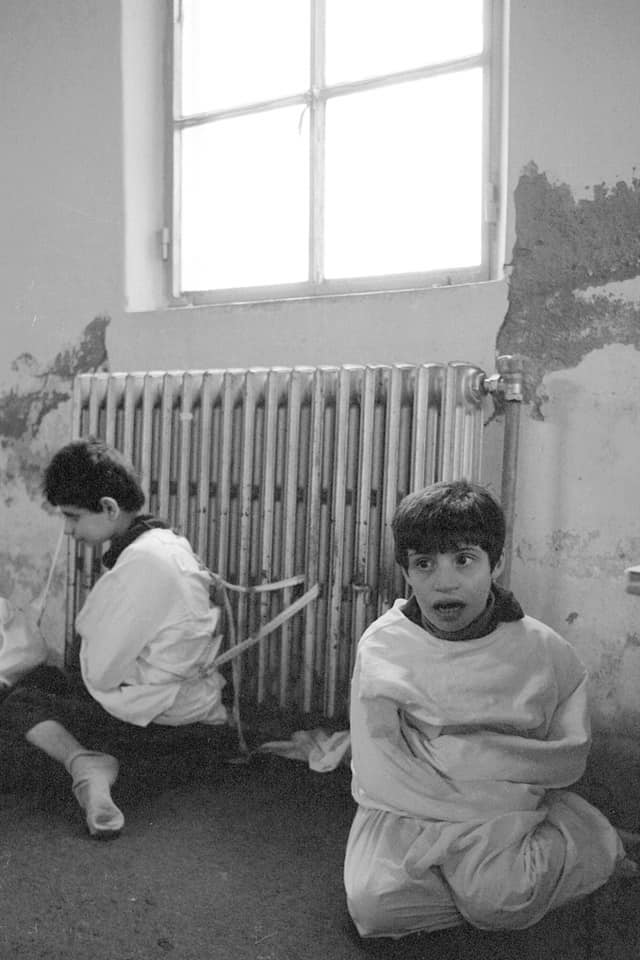
In actuality, the hospital who was charged with the treatment of some of the most dangerous individuals in the state was rightly described as one big “revolving door.” Patients were committed for an undetermined amount of time. They were given three meals a day, lots of opportunities to interact with others under safe conditions and a general reprieve from the stress of living in the community. Their behavior was stabilized with the chemical restraints of psychotropic medications; and they were expected to perform simply tasks like making their beds, working with staff to clean up after themselves, and otherwise follow basic social norms without loss of behavioral control. If they could do this for a period of time, they were considered ready to reengage with the outside world again.

I stuck out like a sore thumb. Within a few months I had told my bosses that while I was happy to support the hospital in any other way I could, I would not be participating in a limited view of what constituted real change before the courts. I was not capable of being sworn in under oath as a representative of the hospital to say that a patient was now unlikely to reoffend and therefore should be released back into the community, just because they had learned good social manners under relatively safe conditions.
Luckily by then, the patients under my care were beginning to show such unusual psychological changes that were intriguing the higher-ups that I was not fired. Instead, we were able to work out a compromise. Patient loads were shuffled and essentially, I was assigned the treatment of folks who had committed crimes like murder and arson so egregious and/or politically problematic that my superiors were OK if conditional release was a far distant or even an absent goal.
For many years I worked very hard to help my patients move from their tortured internal world into a shared reality that was less dangerous for them and others. Many of them were used to and complacent about the mental illness with which they struggled, but a few were eager to explore new territory. In every group of humans there are lots who could care less about healing themselves, but there are also usually a few who crave the lived experience of accessing the incredible healing abilities that are the natural birthright of human animals.
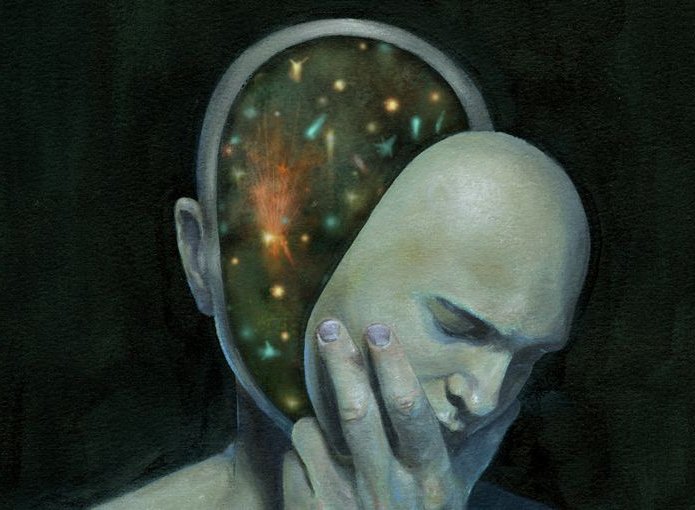
One such individual with whom I had the privilege of working was a young man named Troy. Troy was smart, quiet, well-mannered and could be kind to others. Like many who suffer from a major mental illness, he had learned to do so in secrecy, preferring isolation to the humiliation of judgement by others. One day that was not all that different from any other day for him, he went out and bought a 357 Magnum. A week later he shot and killed his older brother.
After I got to know Troy a bit, I began to sense that underneath it all, he was one of the ones that genuinely craved a new perspective on life. It was not like he expressed any remorse or anything. It was more fundamental than that. It was more like he exuded a hunger for healing. I told him that he did not have to discuss the painful memories about his family with me unless he wanted to. However, I also made clear to him that if he ever expected me to testify in a court of law that he was ready to rejoin humanity, he was going to have to talk to me about SOME real things going on inside of him, not just mouth the usual pleasing-others bullshit. He would have to give voice to genuine thoughts and feelings. He was going to have to share his internal world, whatever it might be, however crazy it might seem, with another human being.
Fast forward close to six years later. In search of ways to help my patients, I had gone back to school weekends and evenings, completing a master’s degree in counseling. It was interesting but not all that useful. I had also begun to learn about working with energy, eventually enrolling in a seminary program—again on evenings and weekends. This was a lot more rigorous and helpful than a counseling program but it was hard to figure out how to apply it to a hospital setting.
Eventually I realized that I had learned all I could learn from my hospital experience, that I had given all that I had to give, and it was time to move on with my healing journey. I let the hospital staff know I would be quitting as soon as two or three of my patients had successfully gone through the conditional release process. By the time I left, Troy was living comfortably on the unlocked transition ward, working parttime at a pizza joint, taking a few classes at a local community college. . .and much to my delight, had even had a couple of dates for the first time in his life with a woman he met in one of his classes.
Several months later, maybe a couple of years, one dark wintery evening there was a knock on my door at home. When I opened it, I found myself staring at a County Sheriff’s Deputy who was there to do a welfare check on me. He told me that Troy had ceased taking his psychotropic medications, had absconded supervision, and the fear was that Troy was coming after me. I had two immediate reactions. First of all, I felt grateful and humbled that the Deputy had taken time from his many important duties to make sure I was OK. Second of all, I was distressed and more than a little irritated that the hospital staff had initiated said check. What that said to me in no uncertain terms is that they were never able to build a solid relationship with Troy, because if they had, they would have known that there was NO WAY he would come to harm me.
Several more months passed. Troy’s body was found in a remote, heavily-wooded area of a national park in Idaho. He had died of exposure, trying to hide from a world with which he was no longer comfortable. I was invited to his memorial which I attended to support his family. As you might imagine, they were in great anguish, entirely devastated. As I listened to his mother talk at great length about her anger towards the shop owner who had sold Troy the gun he had used to murder his brother, I was struck by how her narrative had not changed one word from what she had expressed to me so many times so many years ago. I found myself saddened as I wondered how many hundreds of times Troy had been the recipient of other one-sided conversations without any room whatsoever for him to join in the dialogue. I, of course did not tell her that Troy had spoken to me several times since his death; that he has happy he had moved on and was going to get another chance at embodied life, a fresh, clean new start. He seemed particularly ecstatic that he had figured out how to move on from his physical body without accruing any more karma by hurting anyone else in the process of leaving.
So here we are at the end of my story, and the beginning of my question to you.
WHO WAS RESPONSIBILE for this young man’s “untimely” death? Who should be blamed that for this man with such promise, his life was full of suffering and pain, unbearable isolation and lost connections?
Was it indeed the shop keeper who supplied the weapon that destroyed his family? Was it that his family did not seem to have a place for him in their midst, and did not even notice his absence, much less events like his brother’s bullying? Is it society’s fault that these “lone wolfs”—as they are increasingly labeled by the media and law enforcement such the FBI–don’t show up on our collective radar until it is too late? Or is it our collective fault that civilizations have been around for thousands of years and still we don’t have even the basics figured out about illnesses like schizophrenia? Was it my fault as Troy’s treating therapist? Could I have prepared him a different way, or prepared the situation? I was fairly doubtful that the community supervision staff had the interest or skills that I possessed in building a bridge to this troubled young soul, but I didn’t see that I could do anything about that. Or was it simply all Troy’s fault? After all, he did and does possess free will to create whatever he as spirit wants to experience.
My answer? All of the above.
And. . . None of the above.
Yes, primarily, Troy’s life was and is his responsibility. He created the family into which he was born. He chose the time frame, this period where we are still collectively so lost as to the true nature of mental illness. He and I created the contract to come together to do healing work with each other, long before either of us were actually in a body this time around. He contracted with his Creator for the timing and nature of his demise. Etc. I like to think he did enough healing work with himself to “change his destiny” in the sense of leaving his body without harming others. It is possible to change details of the contract after spirit enters into the physical world. Rare, hard, but possible. I could be wrong.
Beyond Troy’s mockups though, there is the collective space in which all of us participate. We either make choices there consciously; or more commonly give up our individual energy to let them be made for us by other energies. So yes, we all have a bit of responsibility for Troy’s story, somewhere between a very tiny almost microscopic part. . .to a much more prominent role like I or the other hospital staff played. So yes—each one of us has some response-ability to shape a different reality than the one that ensued.
And the none-of-the-above part? Why do I say that? Well, because it really doesn’t matter who is found to be responsible in any situation, if the seeking of that answer comes from a place of judgment.
If you are approaching the question of responsibility in order to figure out who to blame, you are already lost. The blame-game is very big on the Planet right now, and only likely to get bigger. As the natural world rapidly deteriorates, revealing its vulnerability and damage to all, people in the social world are constantly talking about investigations, who should be held accountable, who is responsible. They think they are talking about responsibility but they aren’t even close to understanding that concept. What they are really doing is looking for scapegoats. That is not going to work. It solves no problems. It just creates others.
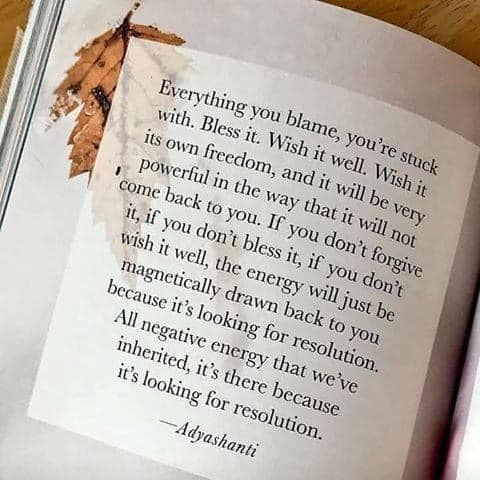
So, my friends, kept working to clear those wounded healer pictures from your fourth chakra. Step back every now and then to examine what is really motivating you as you attempt to heal others. Keep looking inside yourself for your answers to life’s troubling challenges. Above all, find that center-of-your-head space where you can observe without judgement.
And know that you are not alone. You are never alone.
Copyright by the Rev. Dr. Resa Eileen Raven, 2023
 Church of the Harvest
You must be logged in to post a comment.